Questions to Ask Before Applying: A One-Year MBA Readiness Checklist
Last updated on: 21st October, 2026 | Admissions | Shalu Dua: AGM - Admissions, Great Lakes Institute of Management << back to blog
Published on: 21st October, 2026
Table of Contents:
- Introduction
- Is a One-Year MBA the Right Choice for You?
- Do You Meet the Basic Eligibility Requirements?
- How Strong Is Your Work Experience?
- Have You Defined Your Career Goals?
- Are You Financially Prepared?
- Is Your Application Package in Order?
- One-Year MBA Readiness Checklist (Quick Summary Table)
- Start Your MBA Journey With the Right Preparation
- FAQs
An MBA can significantly boost your earning potential. A 1-year MBA gets you there in half the time, without putting your career on pause. If you've been circling the idea of a one-year MBA and wondering whether you're truly ready, you're asking exactly the right question. According to GMAC's Prospective Students Survey, over 60% of MBA candidates say timing was their biggest concern before applying. A one-year programme exists for that reason, to make the timing work for professionals who can't afford to wait two years. But smart ambition needs solid preparation. Before you click 'apply,' it's worth pausing to assess exactly where you stand on your eligibility for the program. This checklist covers every criterion of your readiness for the one-year MBA application. Let’s dive in!
Quick Summary
- Most one-year MBA programmes require at least two years of full-time work experience. Quality and growth matter more than just the number of years.
- GMAT, SOP, and career goals carry equal weight in your application. A strong score alone will not get you through.
- A one-year MBA costs less than a two-year programme but is still a serious investment. Have your financial plan ready before you apply.
- Vague career goals are the fastest way to get rejected. Know your short-term role and long-term direction before you write a single word of your SOP.
- One missing document can delay your entire application. Start collecting your CV, transcripts, experience letters, and recommendations early.
What Makes a One-Year MBA Different?
Unlike a traditional two-year program, a one-year MBA covers the curriculum precisely, without compromising on the standard. Here is what sets it apart:
| Factor | One-Year MBA | Two-Year MBA |
| Program Length | 12 months, year-round schedule | 24 months with a summer break built in |
| Internship Window | No dedicated summer internship period | Summer between years is used for internships |
| Work Experience Required | Heavier emphasis — prior experience replaces the internship gap | Beneficial but partially offset by the internship year |
| Cohort Size | Typically smaller, tighter-knit groups | Larger cohorts with broader peer diversity |
| Classroom Dynamic | More focused discussions; peers tend to know each other well | A wider range of perspectives across a bigger class |
| Total Cost | One fewer year means significantly lower tuition and living expenses | Higher overall spend across two full academic years |
| Career Outcome | Many graduates return to their existing industry, often with a sharply higher salary | Better suited for those making a full career pivot |
Questions to Ask Before Applying for a 1-Year MBA Programme
Most applicants research colleges. Very few research themselves. These questions cover what institutes will ask you and what you should ask yourself before the application goes in.
1. Do You Meet the Basic Eligibility Requirements?
This is the most basic part of your one-year MBA eligibility checklist. Most institutions share a common set of expectations. For instance, the Great Lakes Institute of Management PGPM, the criteria are as follows:
- Bachelor's degree: Any discipline from a recognised institution, with a minimum of 60% marks across 10th, 12th, and graduation.
- Work experience: 2+ years of full-time experience.
- Entrance scores: GMAT (taken after January 1, 2023), CAT 2024/2025, XAT 2025/2026, or NMAT 2024 onwards are accepted.
- Recommendation letters: Professional references from supervisors or senior colleagues.
2. Is GMAT Required for MBA Applications?
Whether GMAT is required for MBA programs depends on the institution. Some schools have made it optional, while others still treat it as a key requirement. As a rule of thumb:
- A score between 600 and 680 is acceptable for one-year programs
- Some institutions accept GRE scores as a valid alternative.
- Executive MBA tracks sometimes waive test requirements for senior professionals.
- Always check programme-specific requirements before assuming a waiver applies to you.
For the Great Lakes Institute of Management, a score of 600 or above is considered competitive, with an 85+ percentile in CAT or XAT as the equivalent benchmark.
3. How Strong Is Your Work Experience?
Work experience is the backbone of any one-year MBA preparation. Admissions teams are not simply counting years on a CV. They show them your expertise and knowledge in the industry, not just a list of job titles. A strong candidate profile usually answers these questions:
- Have you grown in scope or responsibility over time?
- Do you have experience across departments with real value in case discussions?
- Have you participated in informal leadership like managing projects or mentoring peers?
4. Have You Defined Your Career Goals?
Before you ask, should I apply for a one-year MBA, ask yourself: what do I want from it? Admissions essays and interviews almost always want you to explain your career goals with the degree. Vague answers like 'I want to grow professionally' rarely make it past the first round. Specific answers that align with your career goal show your strength.
Think through these four dimensions before you write your SOP:
- Short-term goals: What role or sector do you want to enter within one year of graduation?
- Long-term vision: Where do you see yourself five or ten years from now?
- Programme fit: Does this school's alumni network, faculty, or electives support your goals?
- The 'why MBA' answer: Can you articulate why a management degree is your best next step?
5. Are You Financially Prepared?
Cost is a real consideration for a 1-year MBA even when your academic and professional profile is strong. A shorter programme does not always mean a cheaper one. The total program cost often includes tuition, accommodation, and related charges. Check for scholarships, fellowships, or employer sponsorship. Many schools offer merit-based financial aid for competitive candidates.
For instance, the Great Lakes Institute of Management PGPM fee structure is as follows:
| Program & Academic Fees | Indian Students (INR) | International Students (USD) |
| Tuition Fee | 12,43,000 | 21,050 |
| Program Fee | 6,96,000 | 12,300 |
| Total Fees | 19,39,000 | 33,350 |
If you are seeking a scholarship for your one-year MBA program, explore Great Lakes Institute of Management’s merit-based and diversity scholarships.
6. Have You Prepared Documents Required For The Application?
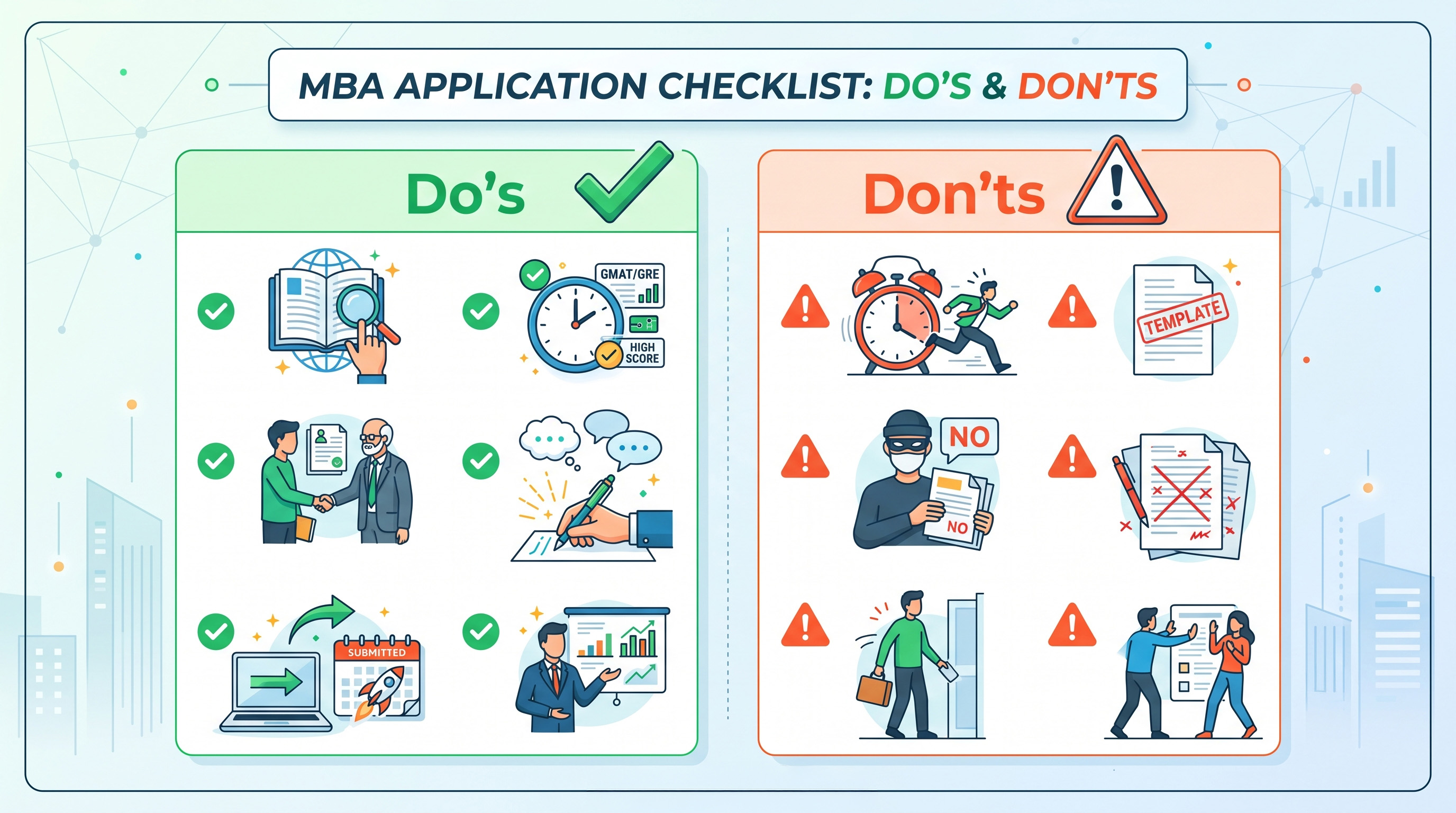
Your PGPM application tells an admissions panel who you are before you ever walk into an interview room. Every document on this list serves a purpose, so missing even one can delay or disqualify your application. Here is what you will need to put together:
- Updated and clear CV
- Statement of Purpose (SOP)
- Two to three strong Letters of Recommendation
- Academic transcripts from undergraduate (and postgraduate, if applicable) institutions.
- GMAT required for MBA / GRE score report within the last five years
- Offer letters, appointment letters, or relieving letters for work experience
- passport, a national ID, or other government-issued photo identification
One-Year MBA Readiness: Quick Summary Checklist
Use this as your final one-year MBA eligibility checklist before you hit submit.
- Bachelor's degree with at least 60% marks
- Two to five years of full-time work experience
- GMAT 600 or above, or 85th percentile in CAT or XAT
- Short and long term career goals defined
- SOP written, proofread, and reviewed by a second reader
- Two to three recommendation letters confirmed
- Total programme cost mapped out and scholarships explored
- Programme faculty, electives, and alumni network assessed
- Application deadlines and financial aid forms noted
Start Your MBA Journey With the Right Preparation!
A 1-year MBA is one of the most efficient investments you can make to upgrade your career. However, make sure you apply when timing and preparation are right. Go through the checklist, and if most boxes are already ticked, you are in strong shape to apply for the program. If a few need attention, focus on the area to improve yourself. Ready to take the next step? Explore the Great Lakes Institute of Management PGPM programme and apply today.
FAQs
1. What is the minimum work experience required for a one-year MBA?
Most programmes set the bar at two years of full-time work. But admissions teams are not just counting years. They want to see that you have grown, taken ownership of something, and can contribute meaningfully to classroom discussions from day one.
2. Is GMAT required for MBA applications in India?
It depends on the school. Some require it, some accept CAT or XAT instead, and a few senior-level tracks waive it altogether. Do not assume a waiver applies to you. Check the specific requirements of every programme you are targeting before you start preparing.
3. Should I apply for a one-year MBA or a two-year MBA?
If you know your industry, have a clear direction, and want to move faster without starting from scratch, the one-year format makes more sense. The two-year route is better suited for people making a full career switch or those who need the extra time and internship window to figure out where they are headed.
4. What is a PGPM and how is it different from an MBA?
A PGPM covers the same core management curriculum as an MBA but is structured as a one-year intensive programme. The application process is nearly identical. The main difference is duration and the assumption that you already have some professional grounding before you walk in.
5. How early should I start preparing for a one-year MBA?
Six months at the absolute minimum. Twelve months is better. You need time to take the GMAT, write and rewrite your SOP, chase down recommendation letters, and sort out your finances. Rushing any one of these will show in your application.