The Potential Future of Indian Retail – Dr. Sunil Chopra – Distinguished Thought Leadership Series at Great Lakes, Chennai
Last updated on: 23rd April, 2026 | Distinguished Guest Sessions | Aditi Jyoti and Aakash Mathew, Class of 2023 << back to blog
Published on: 5th July, 2022
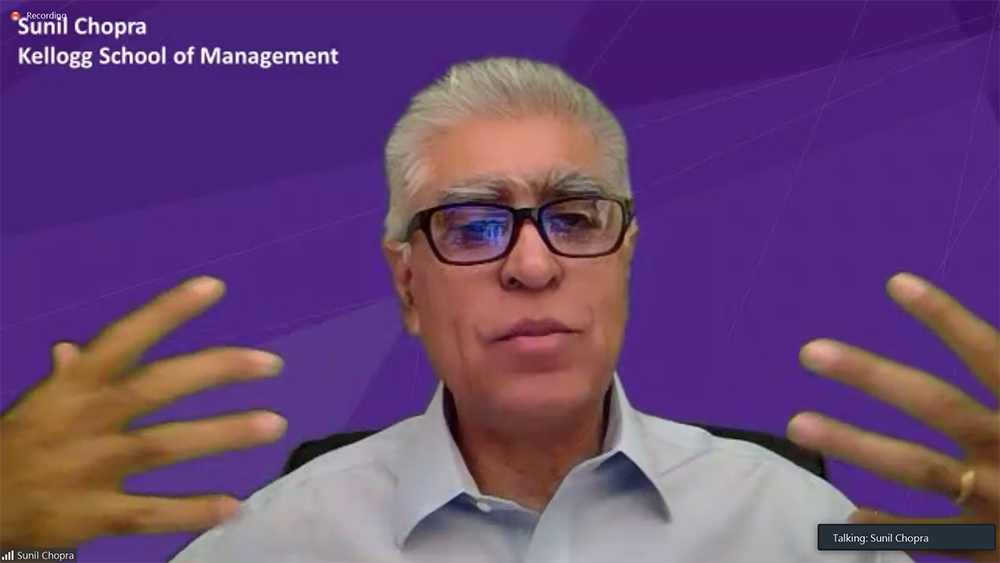
Just like this famous Bob Dylan song, “This is excellent timing, good timing entails changes”. These were Dr. Sunil Chopra’s words as he addressed the incoming PGPM batch of ‘23 who had the singular opportunity to witness Dr. Chopra, Deputy Dean and Distinguished Professor at Kellogg School of Management, in his full glory talking about “The Potential Future for Indian Retail”.
For the longest time, Dr. Sunil Chopra is someone whom Great Lakes has looked up to, thanks to his association with our Dearest and Respected Late Uncle Bala and plenty resonance with our Dean, Dr. Suresh Ramanathan.
Owing to the Distinguished Thought Leadership Series, Dr. Chopra addressed an hour-long session with nearly 350 students, as this experience would certainly be ameliorating the perspective we have of the retail sector.
Dr. Chopra found a number of admirers in us, including our Dean, Dr. Ramanathan who went on to say that Dr. Chopra’s book is the Bible for Supply Chain Management. It was a multifaceted discussion, a concise yet insightful one, where we got to learn precisely about various aspects of supply chain and the elements involved in getting a product from the company to the consumer, and how a customer’s buying behaviour affects the supply chain.
Supply chain is a domain quite foreign to the majority of us, and we couldn’t have had a better opportunity of dipping our toes as he just made the water tepid for us.
Emphasising the importance of timing in creating efficient supply chain models, Professor Chopra noted that India is at the cusp of significant change in its retail supply chain. He then went on to track the evolution of the retail supply chain model in the USA, from the hyperlocal retail model that existed more than 60 years ago, to the Big Box retail brands that dominated from the 1980’s to the turn of the century and finally with the rise of Online and E-commerce giants like Amazon from 2005 onwards.
It was quite pronounced that by widening the spread between the ‘benefit derived by the end customer’ and the ‘total supply chain cost’, value created is maximised and it is this value creation proposition that most influences the need and motivation to constantly re-tool existing supply chains.
The cusp of luring retail in India
Consumption is still the main engine of the Indian economy. The next ten years will see organised retailers focus on footprint development, across all platforms – offline and online – to fuel future growth. India’s retail industry will increase to approximately USD 2 trillion. The development of ecosystems is being fueled by increased competition and the requirement to continuously enhance the customer value proposition. Players from both the retail and non-retail sectors are reaching out to customers. In India, we are already observing signs of this tendency, which is predicted to drastically alter the entire landscape in the future.
India is a very alluring market for domestic and international retail enterprises with a population of over 1 billion. The projected size of the Indian retail market, which represents 10% of the GDP of the nation, is $780 billion. Around 10% of this is organised, while 90% of it is unstructured retail industry. The majority of the unorganised retail market is made up of kirana outlets.
Since most Indian consumers still choose to shop at their local neighbourhood stores for everyday goods and consumables, these stores dominate the Indian retail sector.
Omnichannel- The omnipotent hand of retail
During his session, Dr. Chopra emphasised a lot about the importance of hyperlocal shops or kirana stores. His teachings clearly stated that hyperlocal markets are set to be the new hype in the context of India as well as the US, as they are the ones ensuring last mile instant availability.
In order to throw light on the omni-channel supply chain model – recounting a story from his college days in IIT Delhi, Professor Chopra, opined that omni-channel supply chains have been in operation in isolated pockets in places where we would least expect. One such example was the Nai Sarak booksellers from his college days provided a far superior value proposition (when compared to the bookstore on campus) to students like him, by either directly supplying or collaborating with neighbouring booksellers to provide a more expansive range of offerings. Not having to incur as large a rental cost as the university bookstore while also minimising inventory costs, the Nai Sarak booksellers had unknowingly created amongst themselves a retail structure which was both competitive and co-operative in nature.
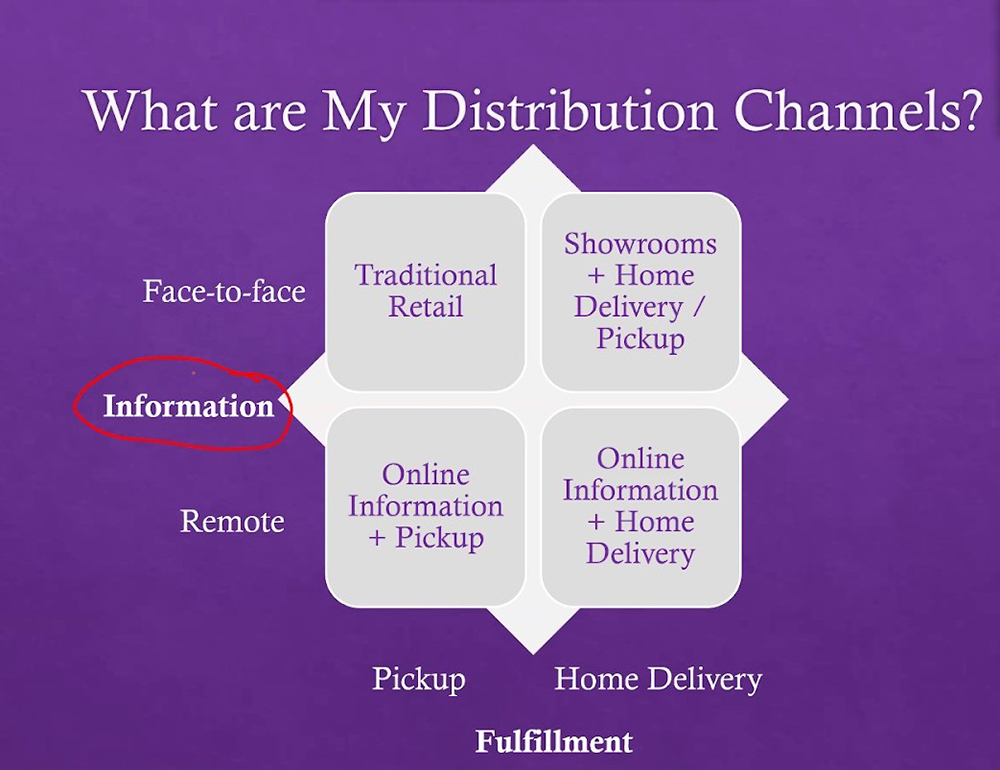
Further elaborating on the framework for designing an effective Omni-channel retail chain, he highlighted that the intersection of the nature of the product, the customer’s need and the channel value proposition, was the key to such a framework.
Dr. Chopra used the examples of detergent and diamonds in the same instance to teach us how a customer’s choice, buying behaviour decides the centralised and decentralised nature of the supply chain.
One of the key takeaways from this session was that major conglomerates are trying to have an optimised omni-channel approach, an amalgamation of online and offline presence in order to widen their presence and increase accessibility for consumers.
He further opined how Omni-channel models by their inherent nature addressed pertinent issues as it pertains to sustainability and the environment.
A by-product of inefficient archaic supply chain systems is increased waste. This waste is minimised due to the efficiency of the omni-channel model. Furthermore, the omni-channel model champions the complete utilisation of existing resources, a case in point being the potential of the Indian Post – office being fully harnessed with the advent of E-commerce and last mile delivery.
Just the end of the session, not the learnings
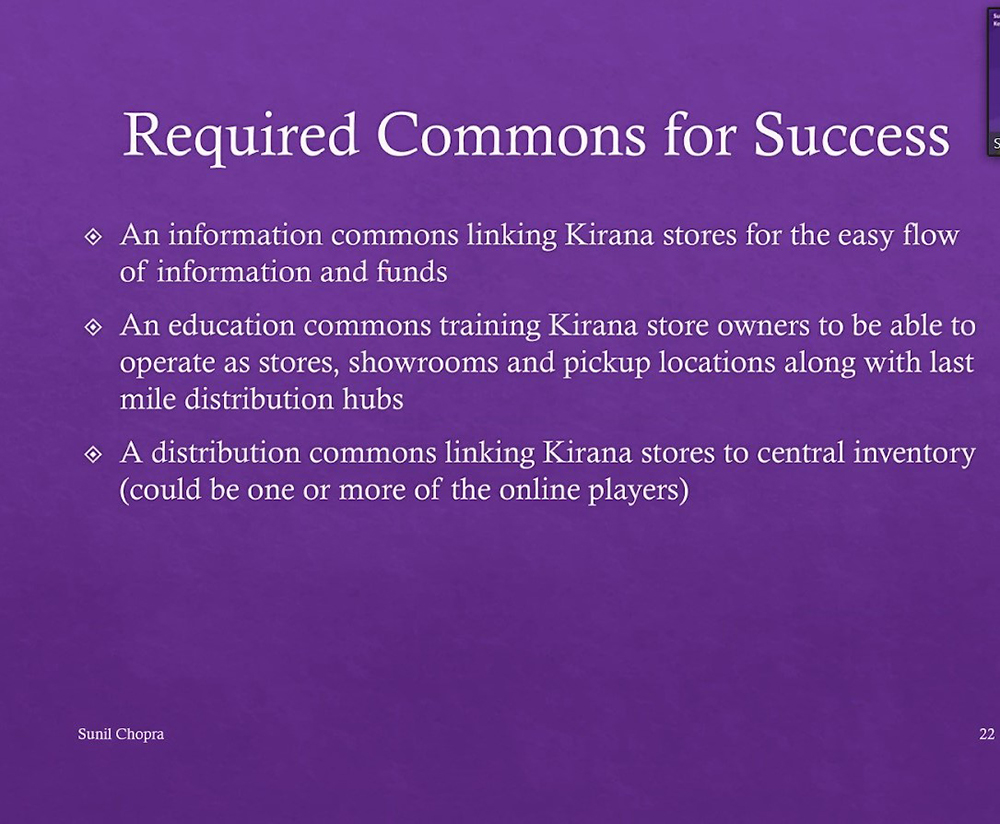
Envisioning the arrival of such an omni-channel model in India, Dr. Sunil ended his talk by enumerating what he saw as the required system of commons that would have to be in place for such a model to succeed. What we primarily understood was online and offline retail will continue to converge. And that the flow of information, funds, and product commemorates an efficient and sustainable distribution channel. The basic customer needs are to be understood, and now that we are spoiled with options, even the market leaders can’t sit latent.

Aditi Jyoti and Aakash Mathew
PGPM Co ’23