Reverse Innovation: India’s Opportunity to Grow the Economy and Solve Income Inequality – Dr. Vijay Govindarajan
Last updated on: 15th July, 2021 | Distinguished Guest Sessions | Krishna Abhilash, Class of 2022 << back to blog
Published on: 15th July, 2021
Innovation is not just Value for Money, it is ‘Value for Many’.
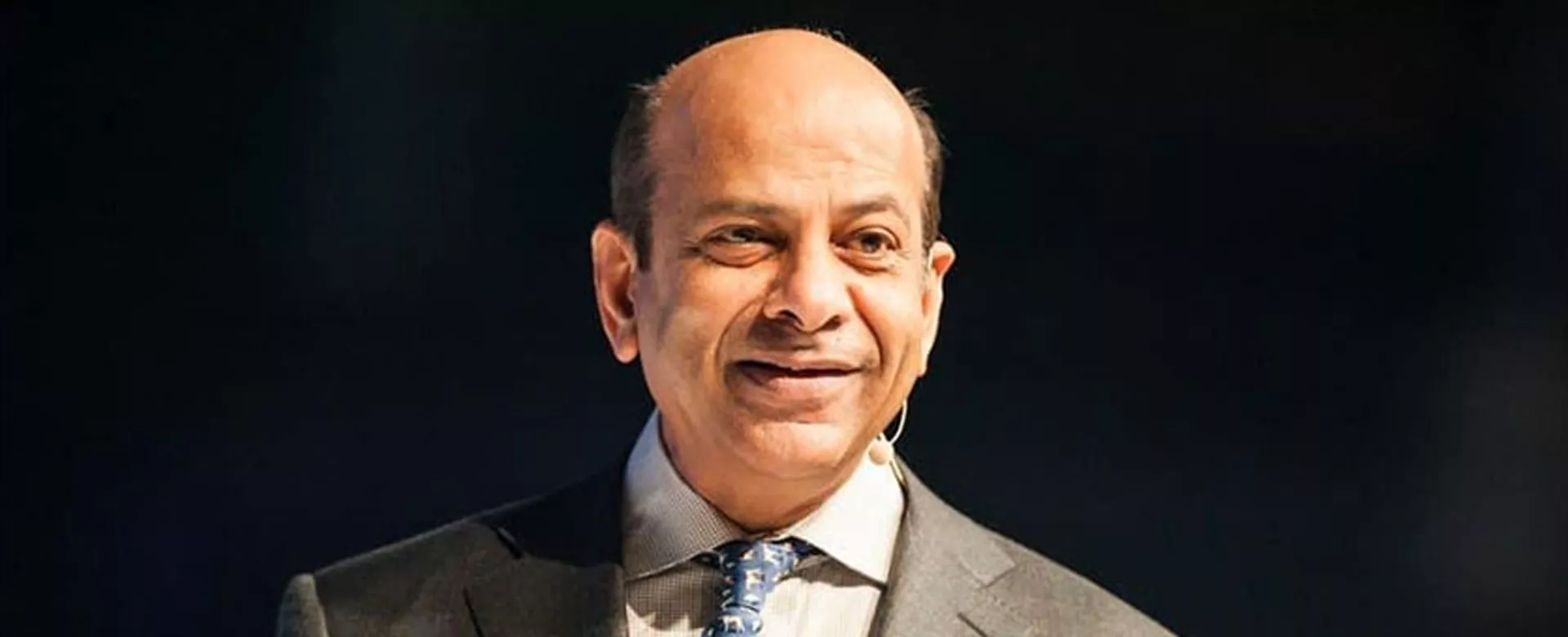
These are the words by Dr. Vijay Govindarajan, Coxe Distinguished Professor (a Dartmouth-wide chair) at Dartmouth College’s Tuck School of Business and a faculty partner in the Silicon Valley incubator, Mach 49. Addressing more than 500 management students of Great Lakes Institute of Management at their Distinguished Thought Leadership Series, he shared his wisdom on Reverse Innovation and inspired the audience to expand their vision to become the budding entrepreneurs and business leaders of the future. The listeners had a dream evening by receiving life lessons by the New York Times and Wall Street Journal best- selling author and a two-time winner of the McKinsey Award for the best article published in Harvard Business Review. Words might fall short to describe the achievements of Dr.Vijay Govindarajan, but the world has acclaimed his contribution to the field of management, strategy, and innovation by inducting into the Thinkers 50 Hall of Fame in 2019. He received Thinkers 50 Distinguished Achievement Awards in two different categories: ‘Breakthrough Idea Award’ in 2011 and ‘Innovation Award’ in 2019. His book, ‘The Three-Box Solution: A Strategy for Leading Innovation’ offers a roadmap for leaders who want to make their organizations more innovative. In the world of Management, his words are considered to be the building blocks of Strategy, Innovation, Globalization and Execution.
In his words, "Reverse Innovation is a process of Innovating in poor countries and selling the innovations in rich countries, instead of the other way around which is the conventional form of Innovation." As per World Bank Report 160 countries are considered as poor countries due to their Per-Capita Income being lesser than the global average. He further describes ‘Reverse Innovation’ as doing more with less, doing world class with ultra low cost. He says, "Frugal thinking and frugal innovation is the need of hour and the CounterIntuitive of Reverse Innovation will change the fortunes of emerging markets like India." He explains the process and success of ‘Reverse Innovation’ by giving a classic example of our own Indian unicorn, ‘Narayana Health’.
Narayana Health (formerly known as Narayana Hrudayalaya) is a multi-speciality hospital chain founded by Dr. Devi Shetty in 2000. Following their motto of ‘Health for all, All for Health’, Narayana Health is a pioneer in one of the most complex medicine fields, cardiology. With their credentials, the management of this organization could have made it another money minting healthcare provider, but the Purpose of Narayana Health makes it stand unique in its field. The cost of Open Heart Surgery in well known hospitals in the USA is around $150,000 whereas Narayana health provides the same service at a 75 times lower cost, which is just $2000. In addition to this, they don’t charge a single penny from 45% of the customers undergoing Open Heart Surgery for economically weaker sections of the society along with reimbursing their travelling and accomodation costs. While the whole world is trying to spread the lessons of philanthrophy, our own Narayana Health practices it. This huge difference in the cost of same Open Heart Surgery between two counterparts might raise questions on the quality of treatment, but the facts have a different story to say. ‘Mortality rate’ of the patients of Narayana Health after 30 days of treatment is 1.2% whereas the same in the USA is 2%. Generally, Indian hearts are considered to be genetically weaker. The higher pollution and lower hygiene levels makes the case more complicated for the surgeons of Narayana Health. But the positive part is, often handling such complex scenarios increases the skill and potential of our cardiologists drastically. Hence a lower cost doesn’t mean a compromise in quality but Reverse Innovation enables organizations to provide ‘World Class Product or Service at an Ultra Low Cost’.
But why should such a large organization provide their service at such a low cost?
As per the conventional thoughts, aren’t they losing out on potential revenue? Why not get that extra revenue on our hands when they are fully capable of doing it? These are the general questions which can arise in the minds of any management student. Dr. Vijay Govindarajan answers these questions by continuing the story of Dr.Devi Shetty & Narayana Health. Being a Profit Maximizing firm, this organization covers its entire costs of Open Heart Surgery from the remaining 55% of its customers who are able to pay, by just charging them $2000. But how? They are similar in terms of technology and resources in comparison to their counterparts in the USA, but how are they still able to manage it? The answer is, Narayana Health utilizes their resources 75 times better and the cost per unit product or service comes down. In terms of Manufacturing sector, this is more like producing Open Heart Surgery in an assembly line! They even run a hospital in the Cayman Islands in Caribbean Sea and that’s how Innovation in India transforms the lives in western part of the globe. And this is possible only if one finds his or her Purpose as Dr.Devi Shetty did after performing Open Heart Surgery for Mother Teresa. Business makes profit and profit enables us to achieve purpose.
What is Purpose and Why Purpose?
Any Product or Organization or an Individual can be evaluated on ‘What they are doing?’, ‘How they are doing it?’ and ‘Why are they doing it?’. While almost everyone can answer the first question of what they are doing, only a certain number can describe how their way of doing is unique or superior. But very few can explain the third and most important question. A Ted Talk by Simon Sinek, a British-American Author explains how an answer to the question ‘Why’ completely changes the perspective. Every Inspiring (market/personal) leader , be it Apple, Martin Luther King Jr., or Wright brothers or many more, they think, act & communicate in the exact same way. And that is the world’s simplest idea, the Golden Circle, which starts with ‘Why’ at its core, then comes ‘How’ and then comes ‘What’.
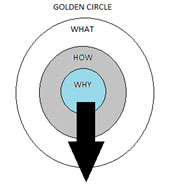
‘Why’ might not open up to profit directly but it is the Purpose, Cause, Belied and being Inside Out. People don’t buy what you do, they buy why you do, as the answer for ‘Why’ directly connects with the Limbic Brain which controls feelings, emotions and has a power of decision making. Wrights brothers neither had resources nor had the recipe for success but they had a purpose which made them successful. Whereas Samuel Pierpont Langley had ample amount of funding but failed because of not having a purpose. ‘What’ and ‘How’ are necessary but not sufficient for greatness, whereas ‘Why’ has to be deeply felt and come from heart. It’s those who start with ‘Why’ have the ability to inspire those around them or find others who inspire them. And that inspiration will lead into imagination and further into innovation. And India is pioneer in such innovation as a successful Mars mission from India costs half of an American Movie based on failed mars mission. India believes in the principle of inclusion, hence can be a future leader in terms of ‘Reverse Innovation’.
Why can India become a major player in the field of Innovation?
India has an emerging market and it is a great opportunity for India to leverage our knowledge, skills and capabilities to serve India. Labour cost is not the only factor changing the picture but the key is ‘Management Innovation’. Constraints are the motivator for innovation and severe constraints are the motivator for ‘Reverse Innovation’. With a population over one billion, India has a higher demand for products than western countries. But currently only 10 % of our population have access to high quality products. The real task is to make the remaining 90% as consumers and that is what Narayana Health did. Western market would get disrupted by a Product with world class quality at Ultra High Cost. It happened in Automobile industry with the entry of Japanese players and with the US Postal service with the entry of Fedex also in local transportation with the entry of Uber. That is the essence of breakthrough Innovation. By innovating for the poor and serving the poor, one can give an opportunity to others to make money in the future. The topmost problem India is facing today is ‘Income Inequality’ and reducing the income inequality is the highest form of achievement that Indians can be proud of. It cannot be done by taxing the rich and giving it to the poor, but by creating opportunities for them, enabling them to earn more money. The best way to address income inequality is by ‘Income Mobility’, which can only happen through Innovation. The world is open for breakthrough innovations and it can only happen with the Purpose, so let us search our soul, discover our purpose and unleash the innovators in us to create value for many!

Krishna Abhilash
PGPM Co’22, Great Lakes Institute of Management, Chennai.